Case study
Hybrid Event Experiences
In 2020 we had twelve weeks to make software built for in-person events work online. Six years later, it runs the biggest hybrid events in the world.
Senior Manager, Product Design · RainFocus · 2020 to 2026 · Design team grew from 5 to 13
01 Overview
In March 2020, every event platform got the same call. The venue's closed. Can you make it virtual? We'd built RainFocus around people being in a room together, and suddenly nobody could be.
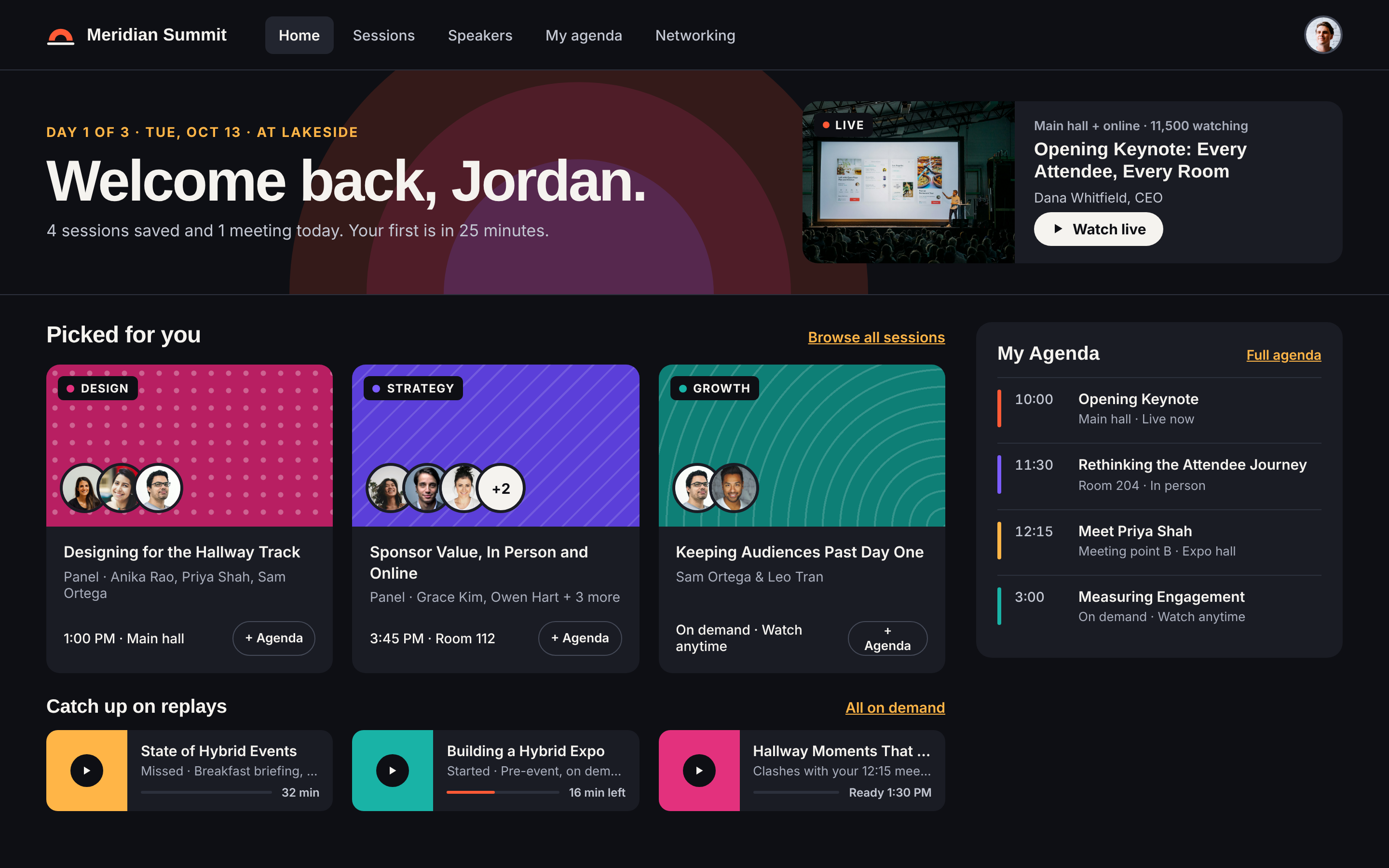
Meridian Summit is a fictional event. These screens recreate functionality we built at RainFocus, redrawn to protect client data and proprietary designs.
02 One event, every attendee
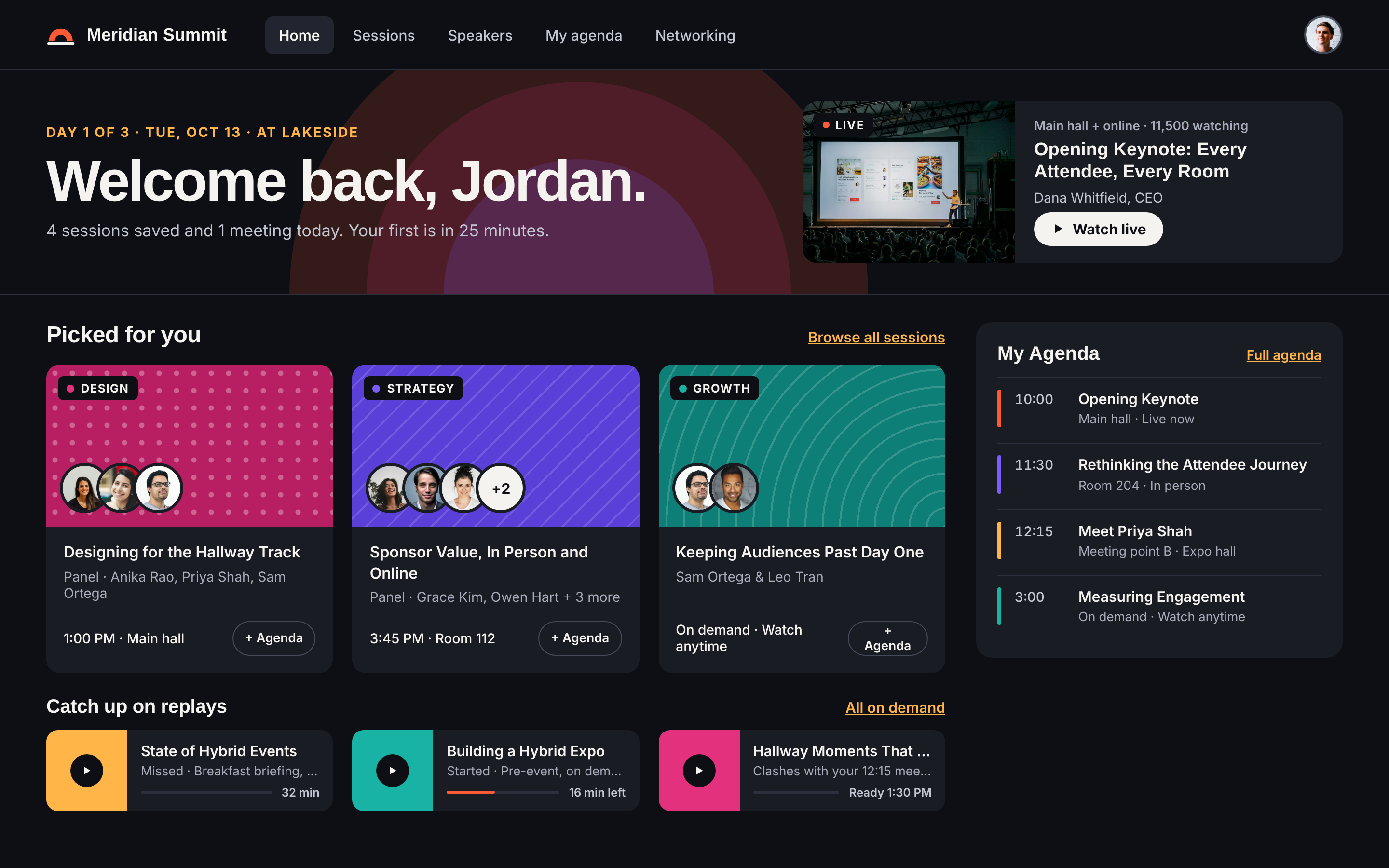
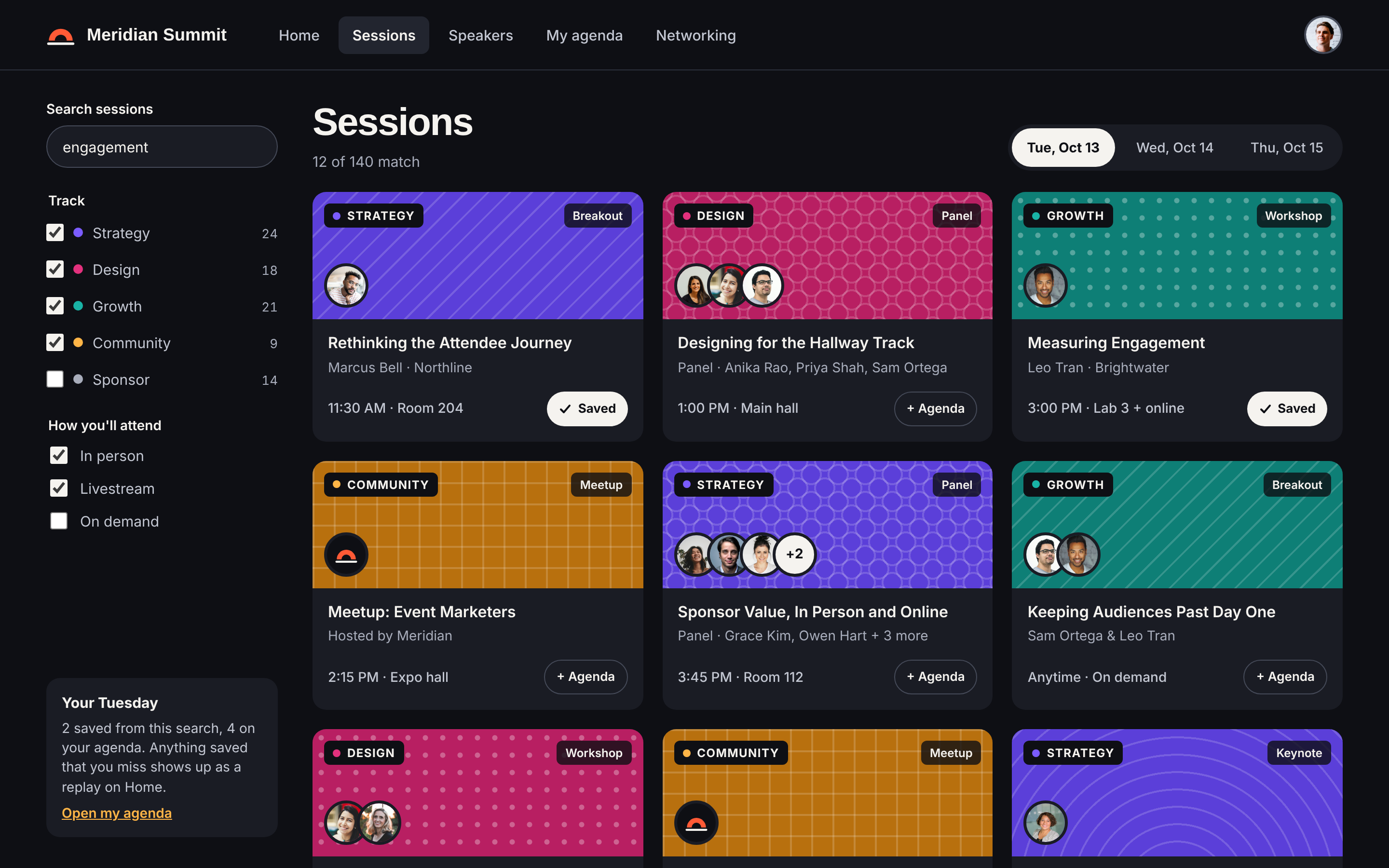
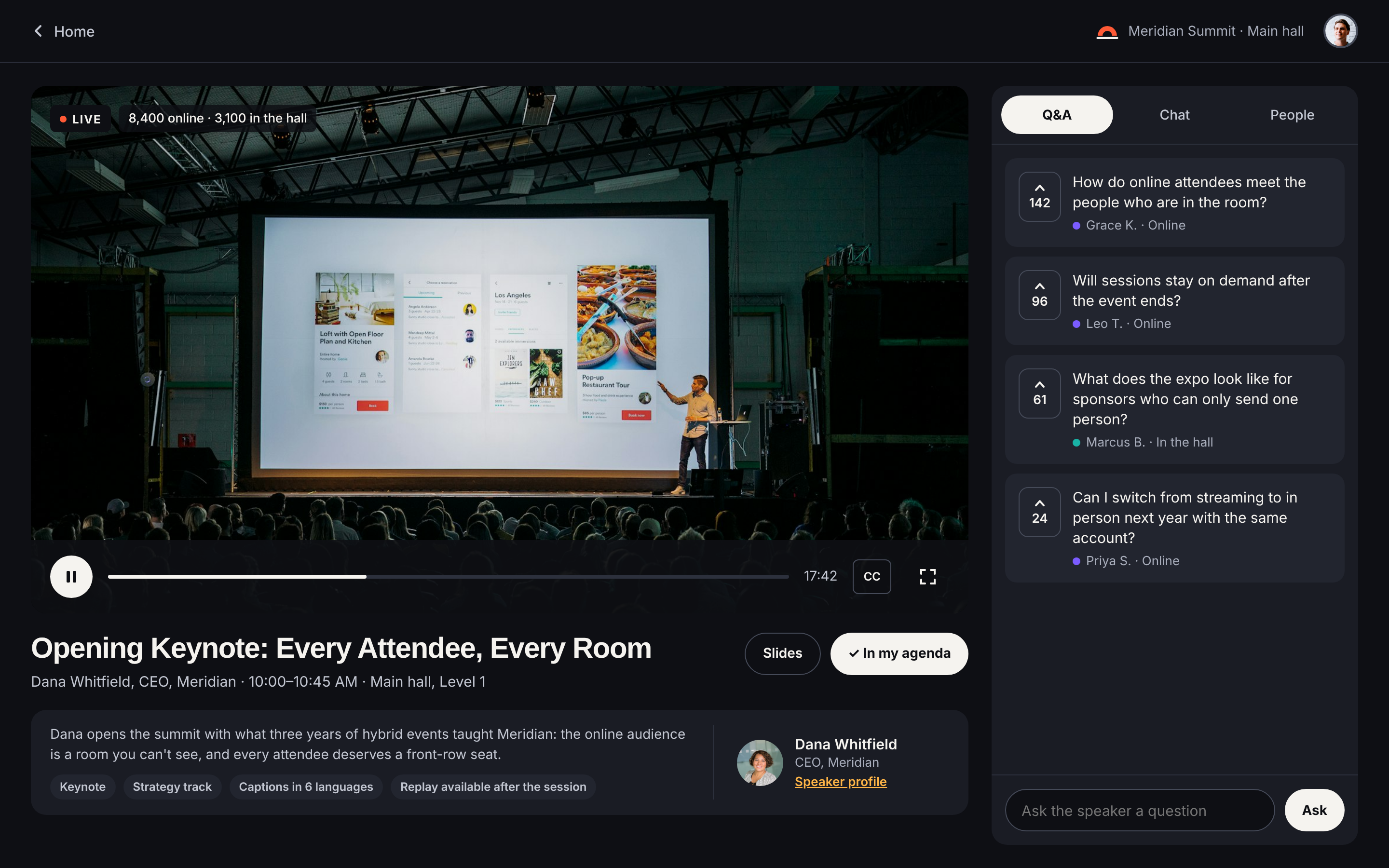
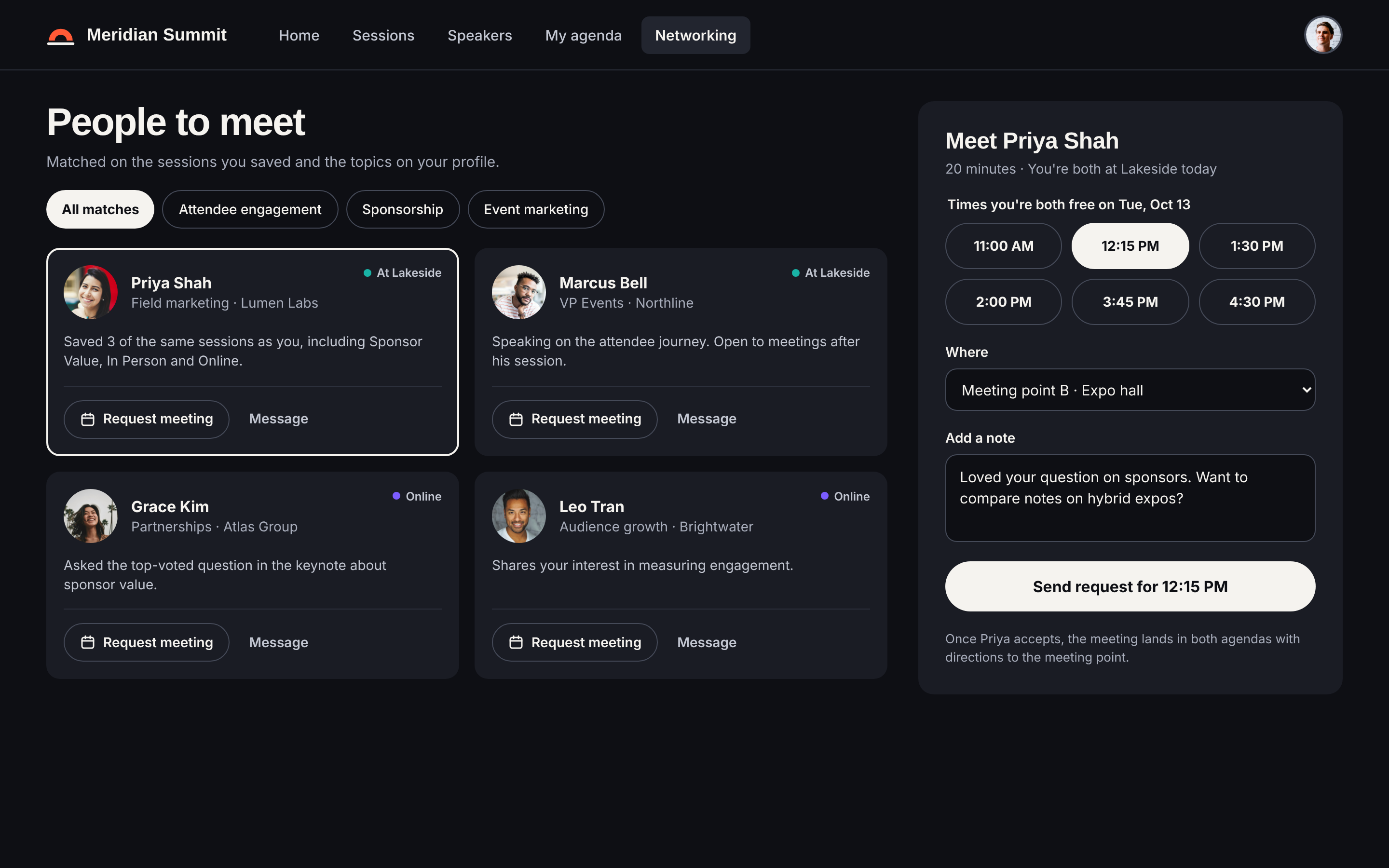
Someone in the main hall and someone watching from their kitchen are at the same event. Same agenda, same sessions, same people to meet. That sounds obvious now. It wasn't in 2020, when online was the whole event. And it wasn't when venues reopened and plenty of people assumed online would quietly go away. It didn't.
So we stopped treating online as a second event. Every session, question and meeting works for both, and it all lands in the same agenda.
03 Sites the whole team can build
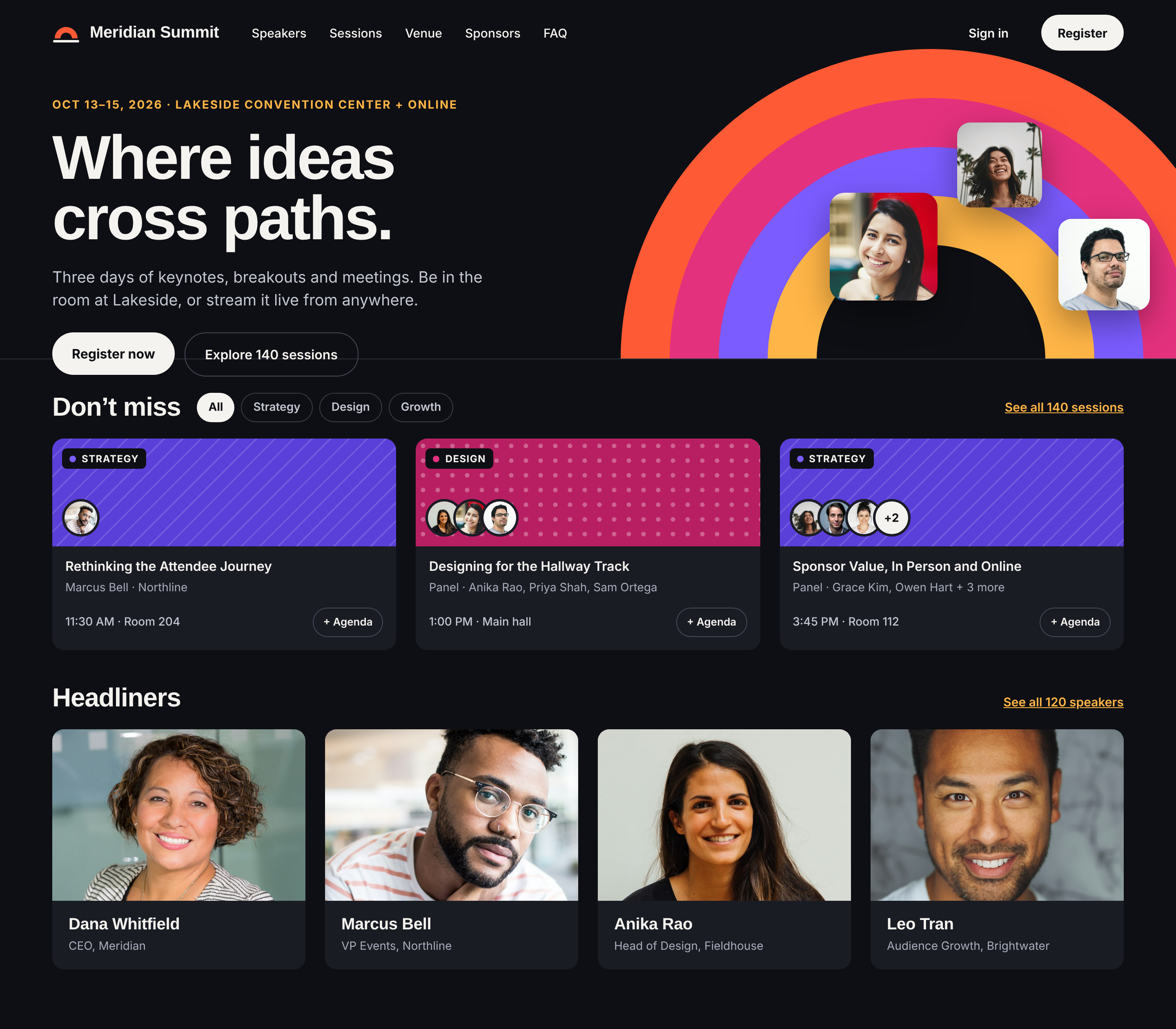
Our implementation specialists still built most event sites. Page Builder made them faster. It also let a client swap the hero or move sessions up the page the night before doors opened, without waiting on us.
04 The phone at the venue
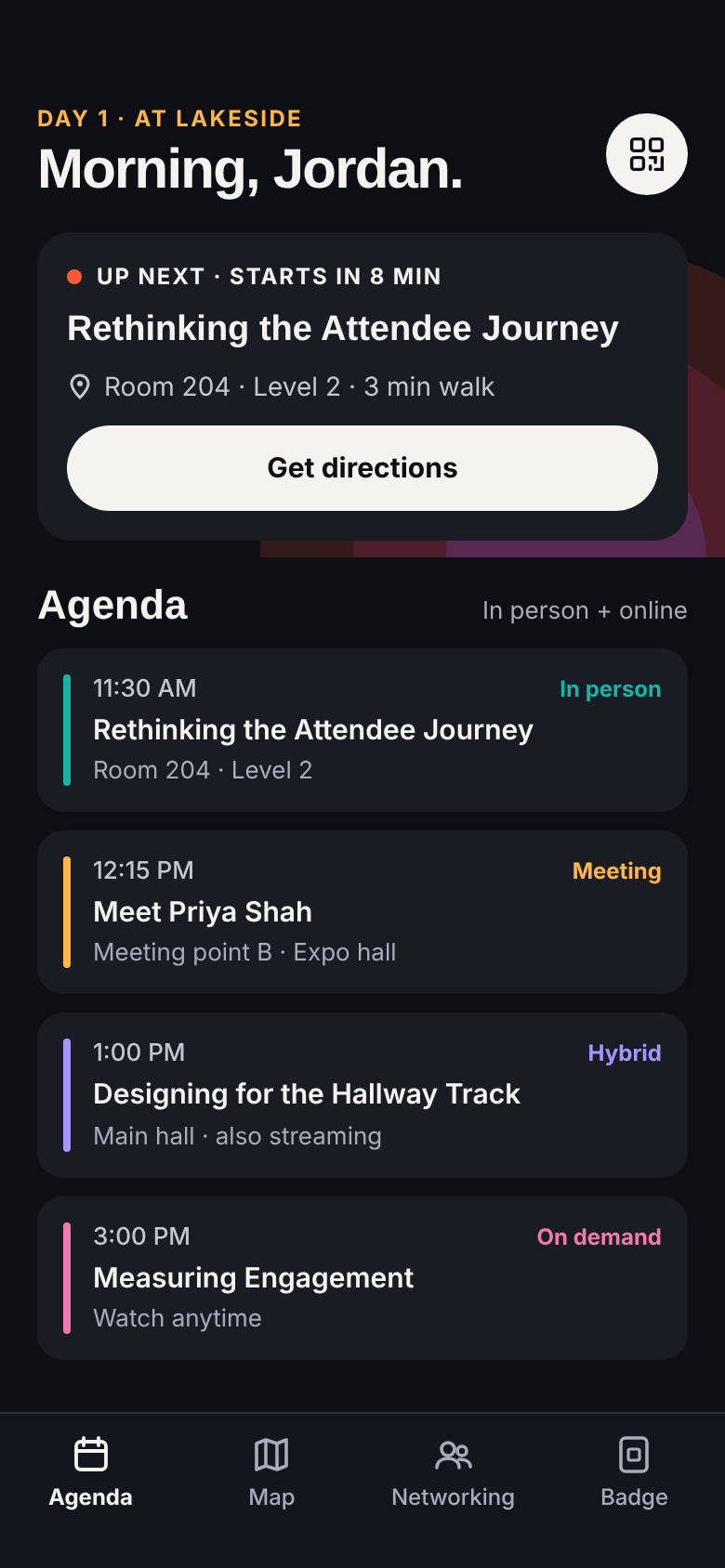
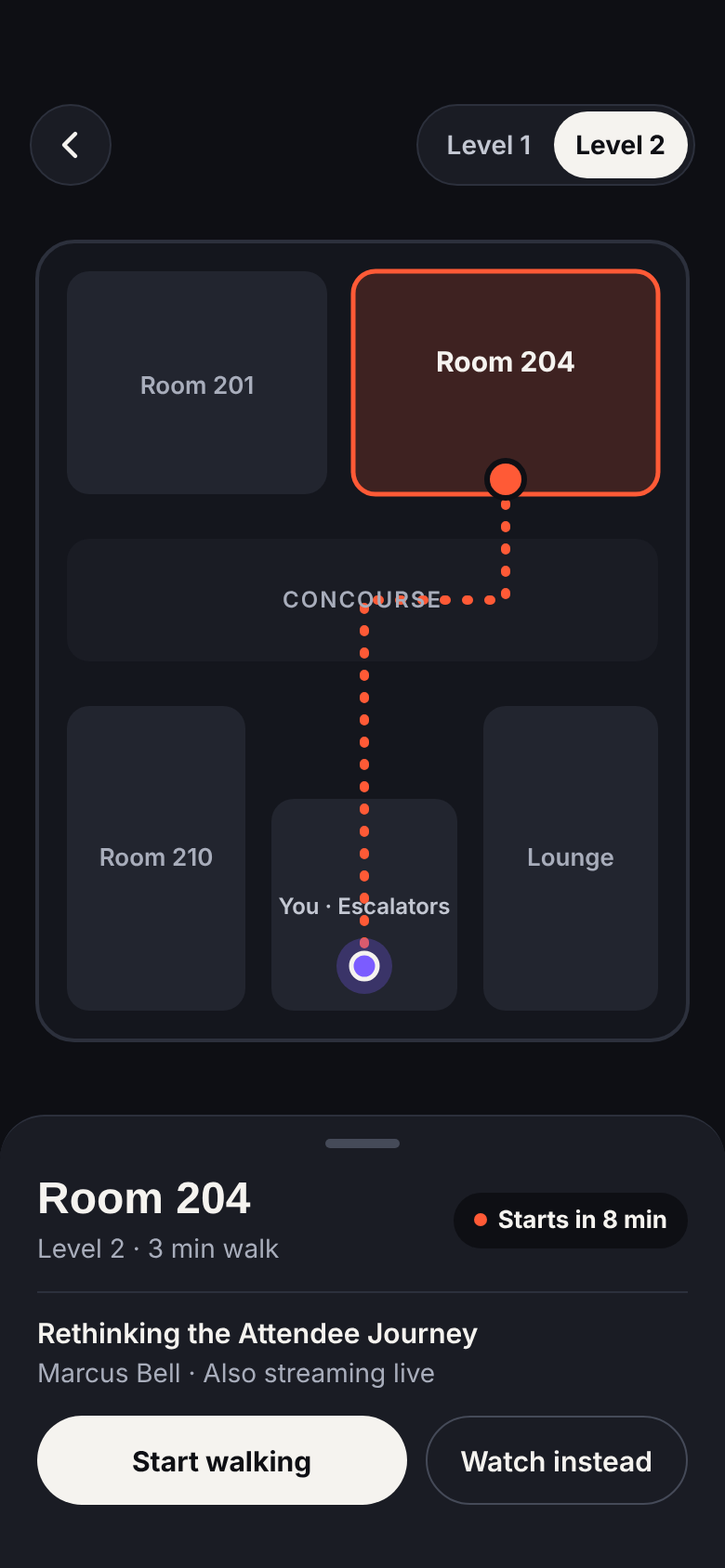
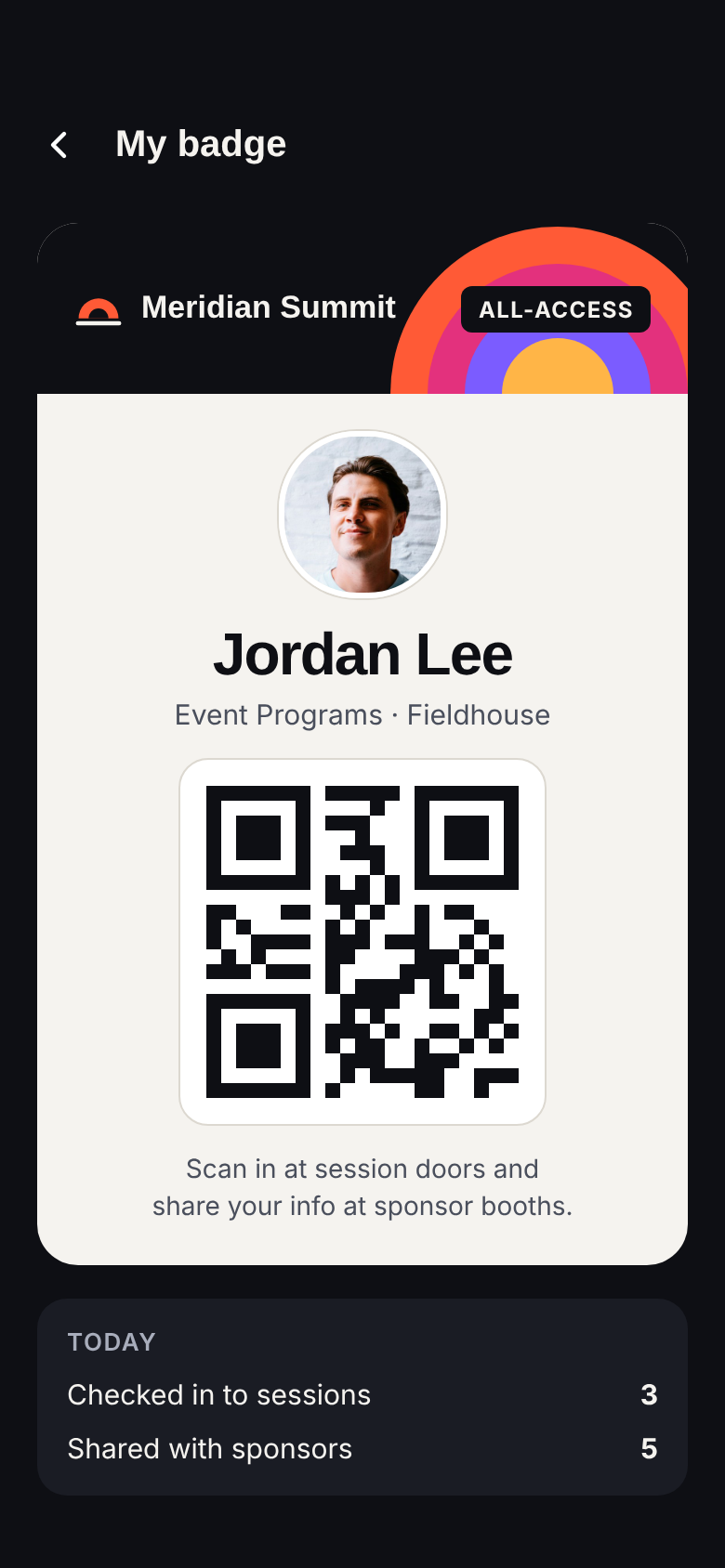
When people came back to the convention center, the phone became the event. Your agenda, a map that walks you to Room 204, your badge. All in one place.
And if you're running late, Watch instead is right there. I like that button more than I probably should. It's the whole pivot in two words.
05 Outcomes
- 3.9M+ virtual attendees in 160+ countries by mid-2021
- 55% fewer implementation hours per event after the 2024 platform release
- A Gartner Leader three years running, and a Forrester Leader for virtual event management in 2026
06 The thinking behind it
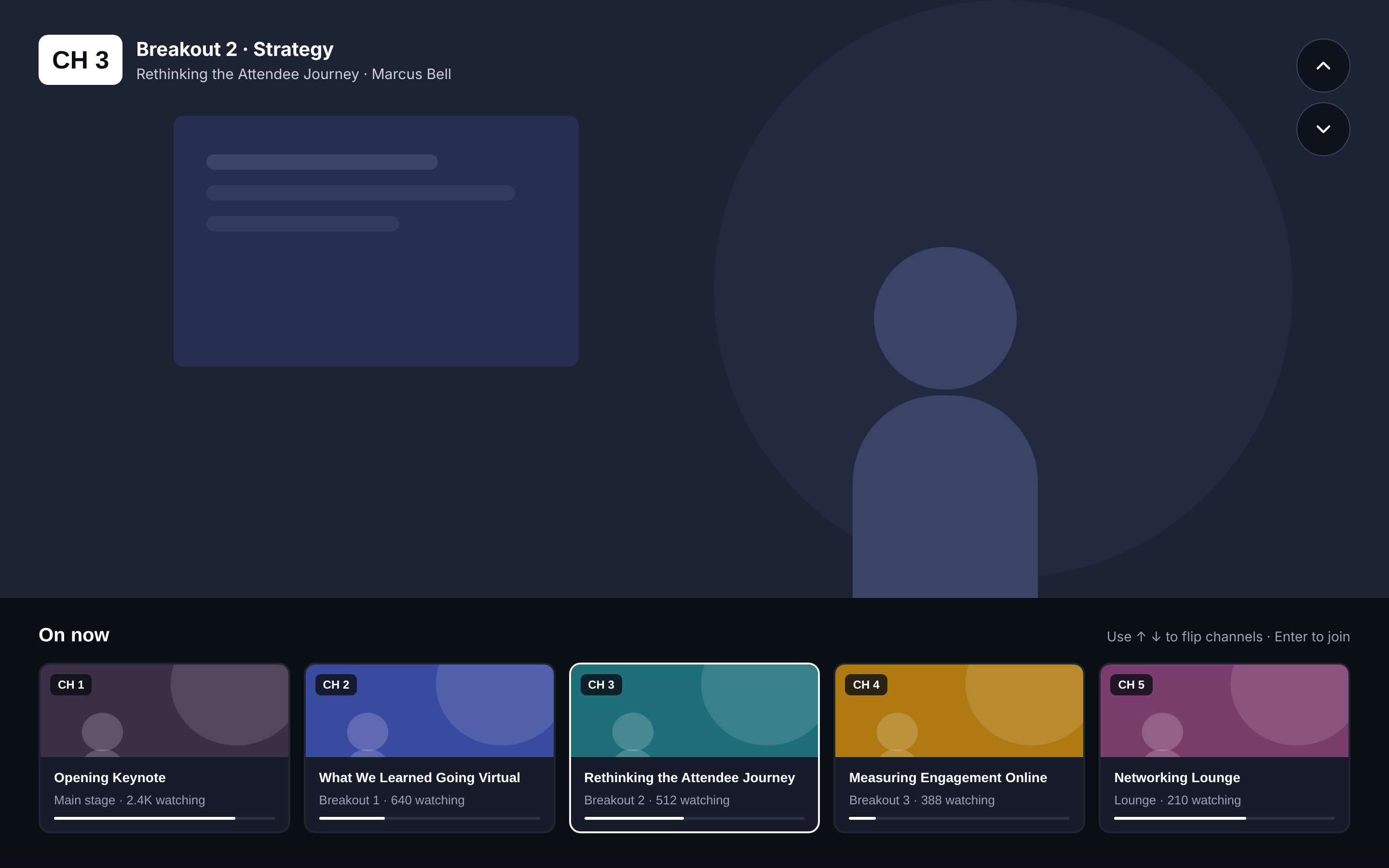
Think big. We didn't start with screens. We started with an affinity map of everything clients were telling us, then let ourselves think way too big. My favorite idea was channel surfing. Flip between live sessions like TV channels and see what's on everywhere at once. It didn't ship. But having the big version on the wall made it much easier to decide what the small version had to be.
Start small. Twelve weeks leaves no room for nice to have. We used Kano and Jobs to Be Done to separate what attendees couldn't live without from everything else. Then we surveyed clients, and networking came out on top. Honestly, not the answer we wanted. Networking is the hardest thing to do online. We shipped it anyway, alongside Page Builder and the session catalog, around June 2020.
Go and see. In January 2021 we ran INSIGHT, our own customer conference, on the platform we'd just built. Nothing teaches you faster than being the client. We found the rough edges before our customers had to.
Build the team. The team grew from five to thirteen. We started weekly critiques, built a shared design repository and wrote a career ladder so people could see where they were headed.
07 Reflection
Our first virtual event wasn't beautiful. I'll just say that. But it worked, and every event after it got better. The twelve weeks get the attention. I'm prouder of the six years after.
What’s next
More coming soon
I’m adding the research behind the first twelve weeks, a closer look at the attendee experience, and how the platform grew over six years.